← Back to Blog
Ultimate Guide to Adi Kailash Road Trip in 2026 – Route, Permits, Budget, Itinerary & Self-Drive Tips
A raw, spiritual self-drive expedition to Chhota Kailash - everything you need to know before crossing into the Kumaon Himalayas
I still remember the first time I saw Om Parvat.
We'd been driving for six hours on a road that barely deserved the name more like a suggestion scratched into the side of a mountain. My back was killing me, the Thar's suspension was protesting every inch, and I was seriously questioning my life choices. Then we rounded this bend near Gunji, and there it was: the snow formation that looks exactly like Om, just sitting there on the mountain face like Shiva left his signature on the Himalayas.
I actually cried. Not dramatic Bollywood tears, but that weird, embarrassing lump-in-your-throat moment when you realize you've stumbled onto something that doesn't care about your Instagram feed or your job back home. It just is.
That's the thing about Adi Kailash. Nobody really talks about it the way they chatter about Leh-Ladakh or Spiti. It's too far, too raw, too close to borders that make bureaucrats nervous. But that's exactly why you should go.
What This Place Actually Is
People call it "Chhota Kailash" Little Kailash which feels unfair, honestly. Adi Kailash isn't a consolation prize. It's one of Shiva's actual sacred abodes, tucked into the Kumaon Himalayas right where India, Nepal and Tibet sort of breathe the same air.
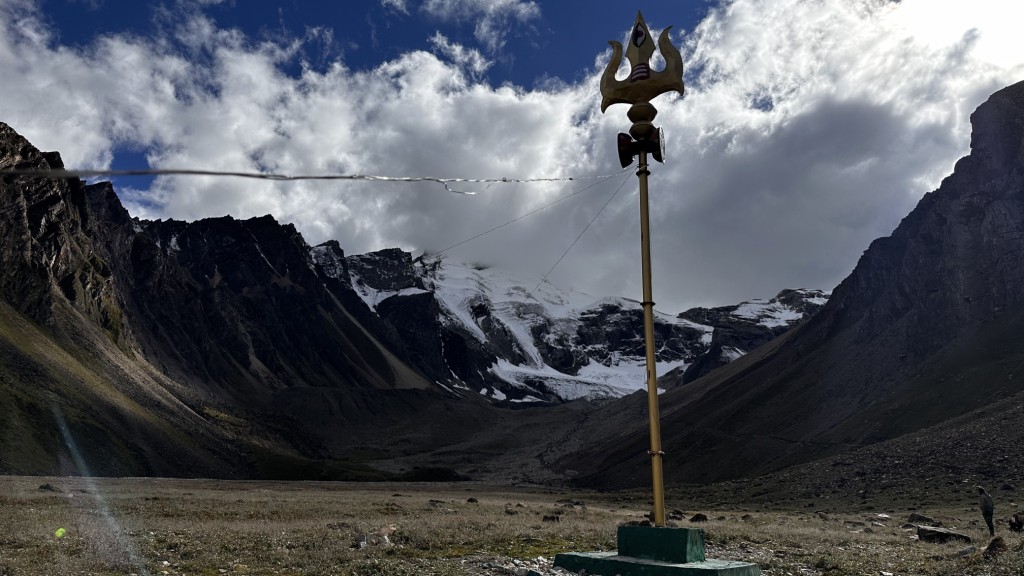
The difference? While Mount Kailash demands weeks of trekking and enough suffering to seriously test your devotion, Adi Kailash lets you drive most of the way. I know, I know—"lets you drive" makes it sound like a Sunday picnic. It's not. But if you've got a decent SUV, some patience, and a stomach for heights that would make your mother weep, you can get there.
Where You're Actually Going
Pithoragarh district. Say that five times fast.
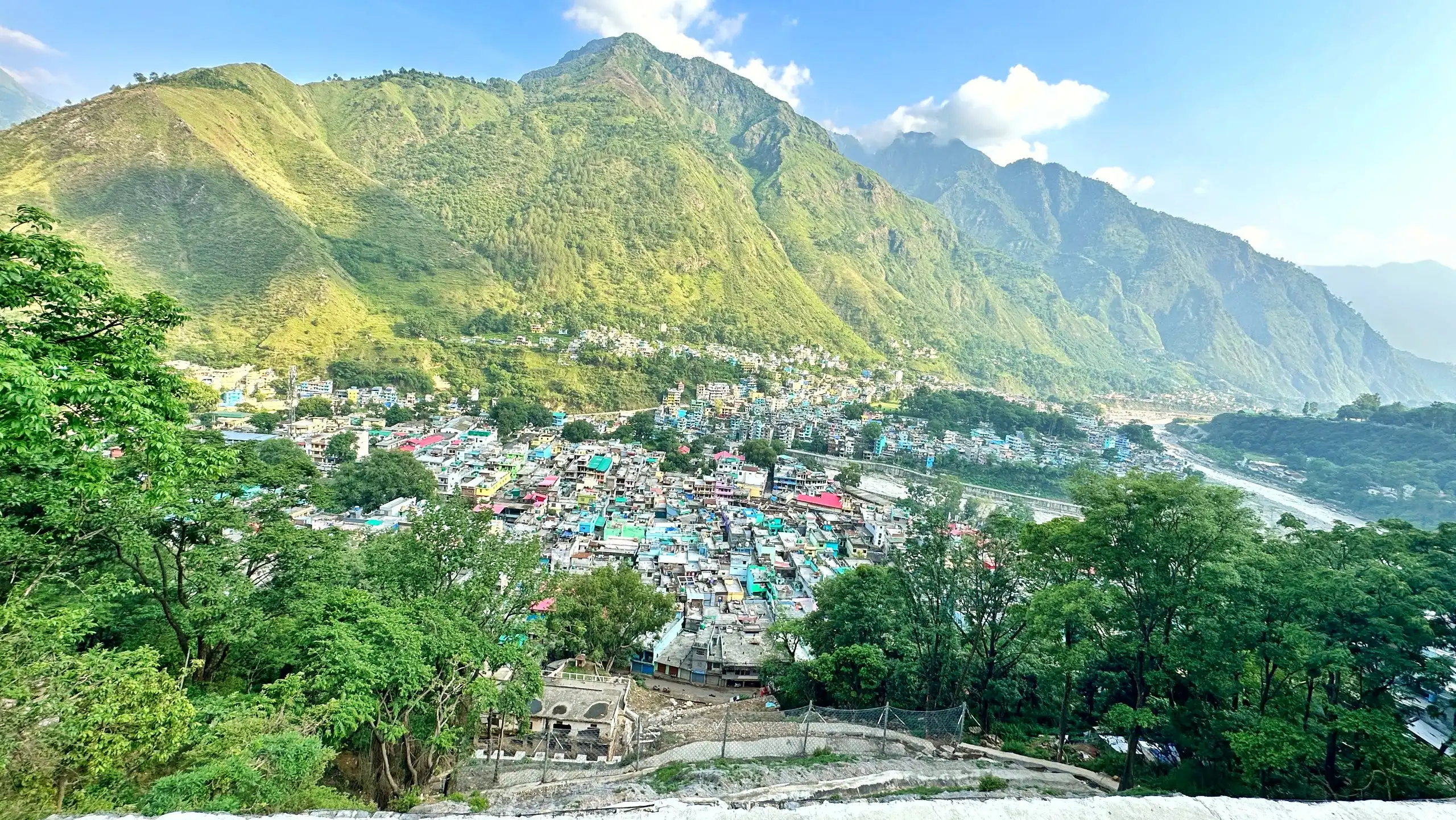
You'll start from Delhi (or Haldwani if you're smart and want to skip the plains heat), then crawl your way up through Almora or Tanakpur—depending on whether you prefer pine forests or river valleys. Pithoragarh is your last real town. After that, it's Dharchula, which feels like the edge of the world, and then the actual edge of the world begins.
The full route looks something like: Delhi → Haldwani → Pithoragarh → Dharchula → Narayan Ashram → Gunji → Kutti → Jolingkong → Adi Kailash → Om Parvat. Round trip, you're looking at 1,200 to 1,400 kilometers. Sounds doable, right?
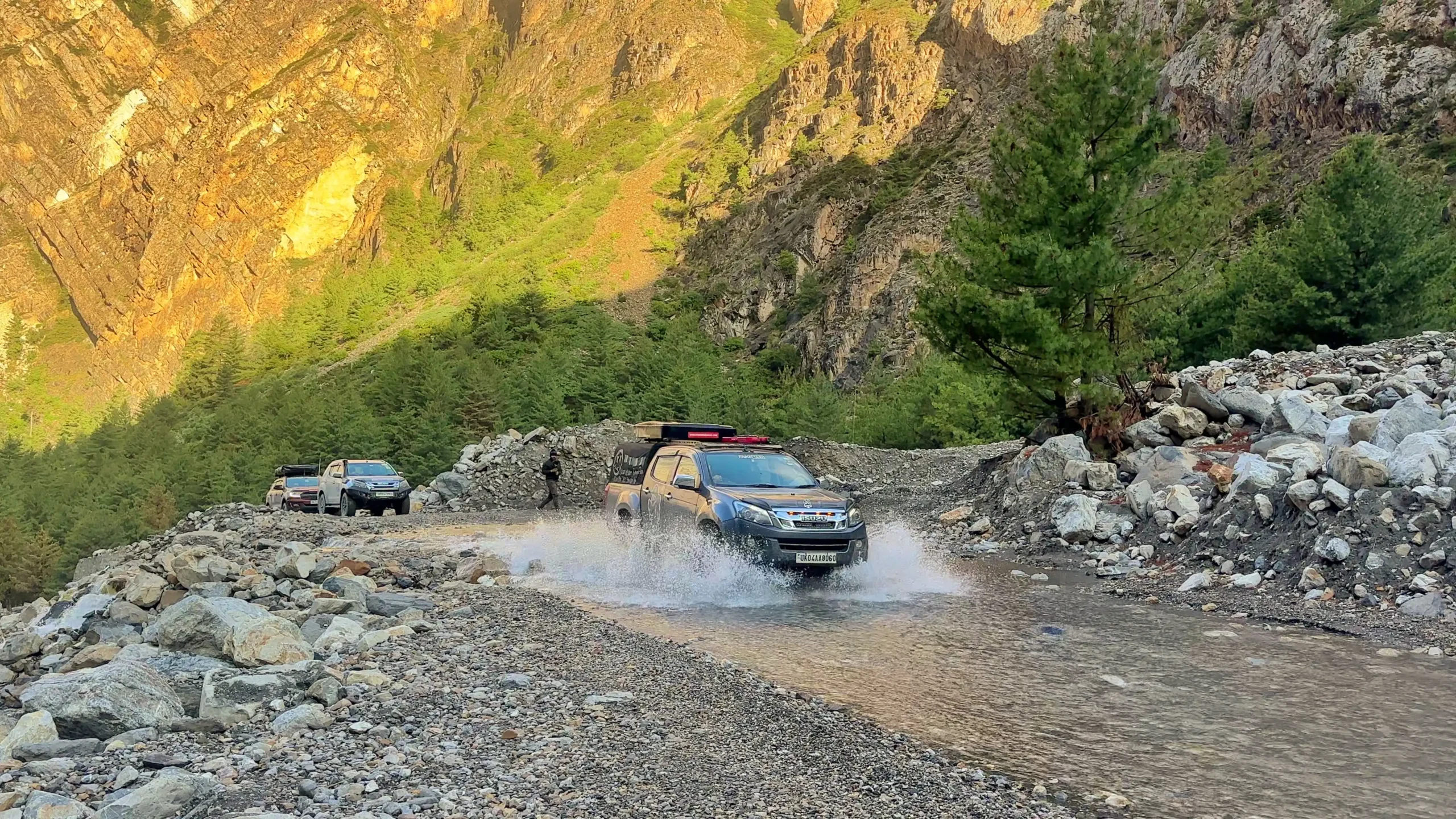
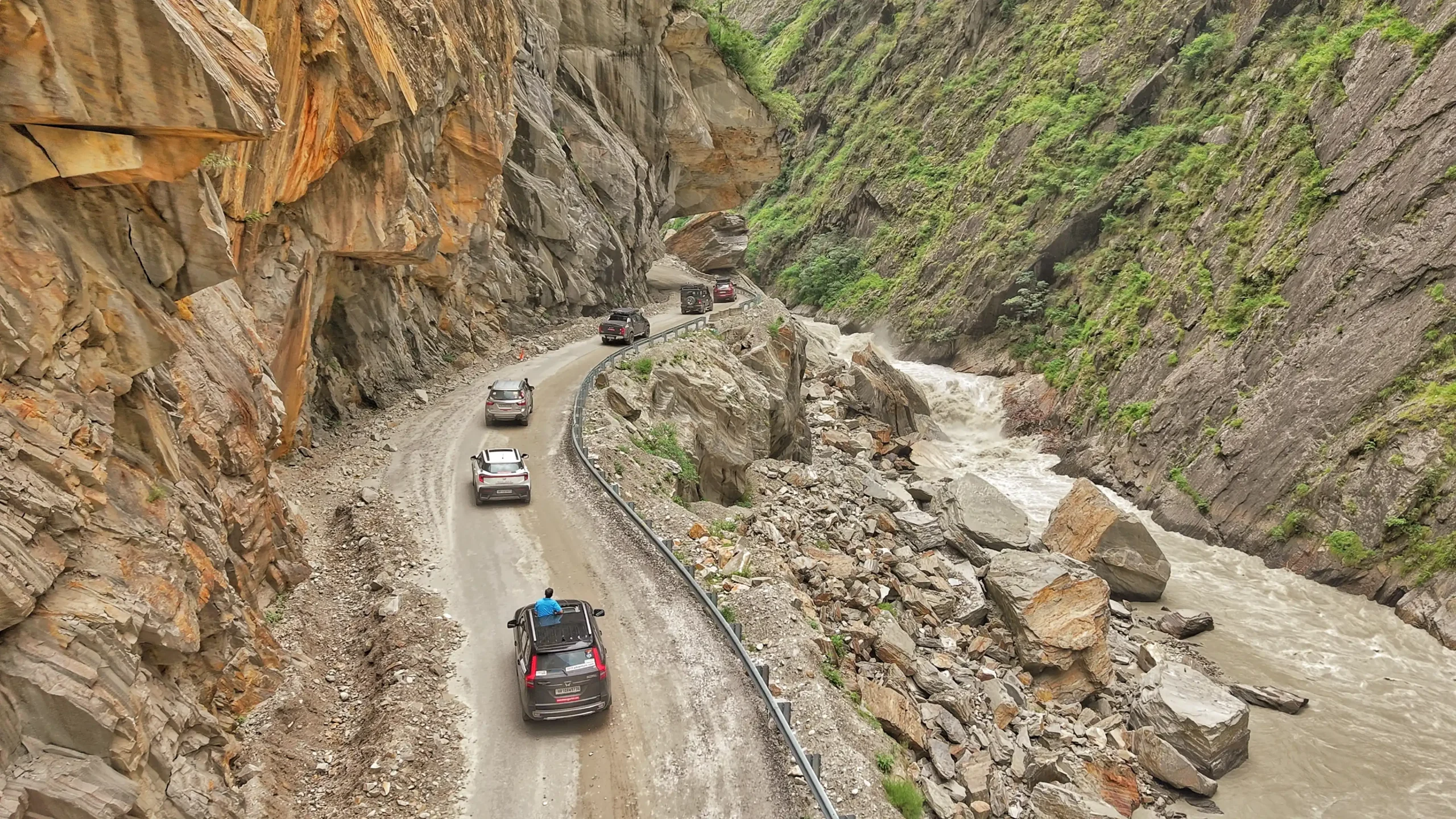
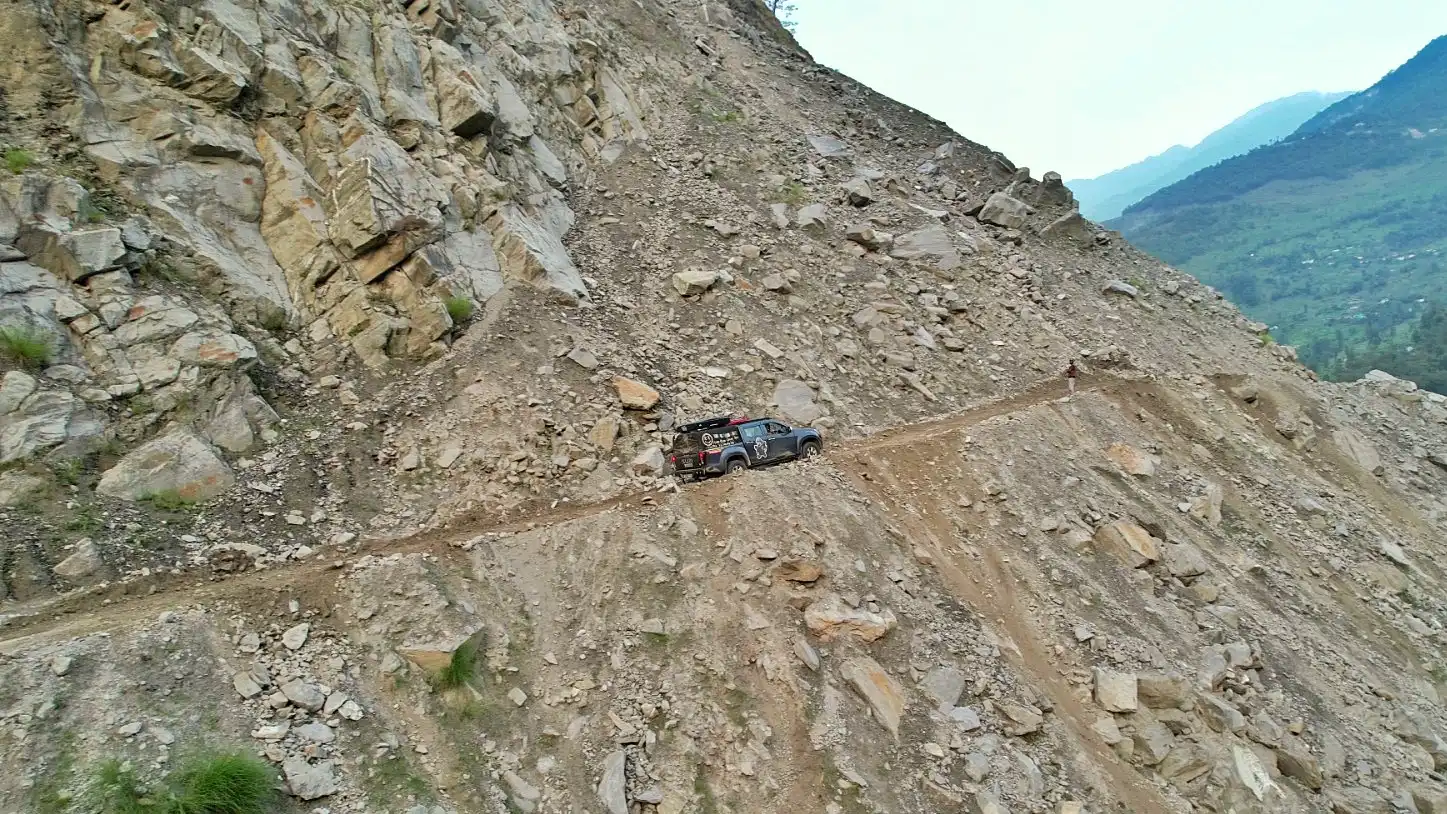
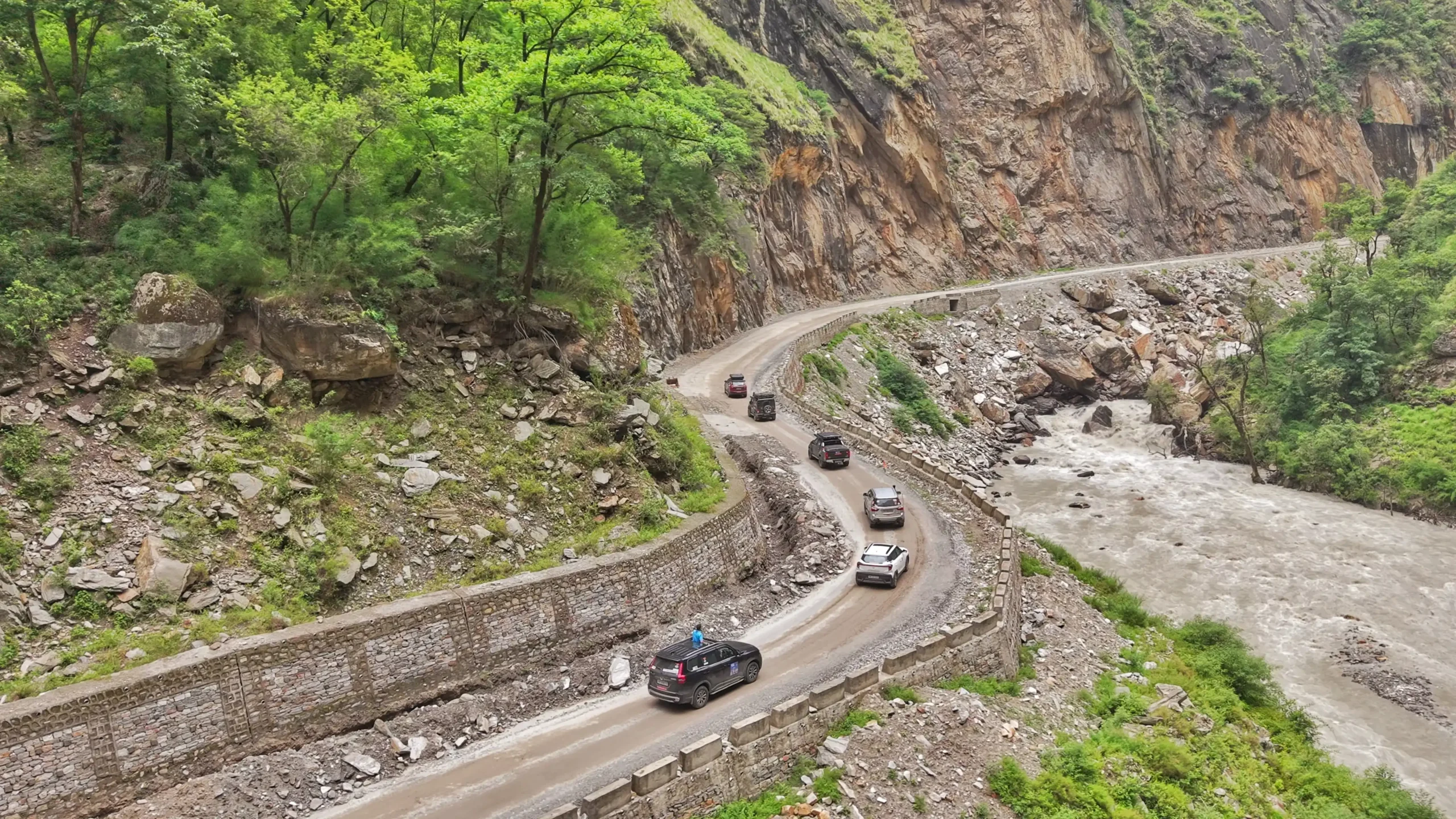
Here's the thing Google Maps won't tell you: about 300 of those kilometers will take you longer than the entire Delhi-Haldwani stretch. The road from Dharchula onwards isn't a road. It's a promise. Sometimes it's dirt, sometimes it's rocks that used to be dirt, and sometimes it's just a ledge above the Kali River where you pray the oncoming army truck knows what it's doing.
The Paperwork Nobody Warns You About
Because this is border country sensitive, strategic, occasionally tense. You need an Inner Line Permit. No permit, no entry, no exceptions, no matter how charming you think you are.
You'll need your government ID, passport photos, vehicle RC, driving license, and insurance papers. Dharchula is where this gets sorted, usually through the local administration office that operates on Himalayan time. "Come tomorrow" means maybe the day after. "It'll be ready" means bring a book.
My advice? Get there early, bring copies of everything (because you will magically need one more than you brought), and don't argue. The folks processing permits have heard every sob story. Just smile, wait, and maybe offer chai if there's a kettle nearby.
Also and this is important: permit rules change. What worked last season might not work this season. Call ahead. Check with local homestays. Join one of those WhatsApp groups where people who've done this route three times share actual, current intelligence.
When to Actually Go
May and June are your golden windows. The snow has retreated enough to let you through, but the mountains still look like they mean business. September and October are gorgeous too post-monsoon green, clear skies, that sharp Himalayan light that makes everything look Photoshopped.</p>
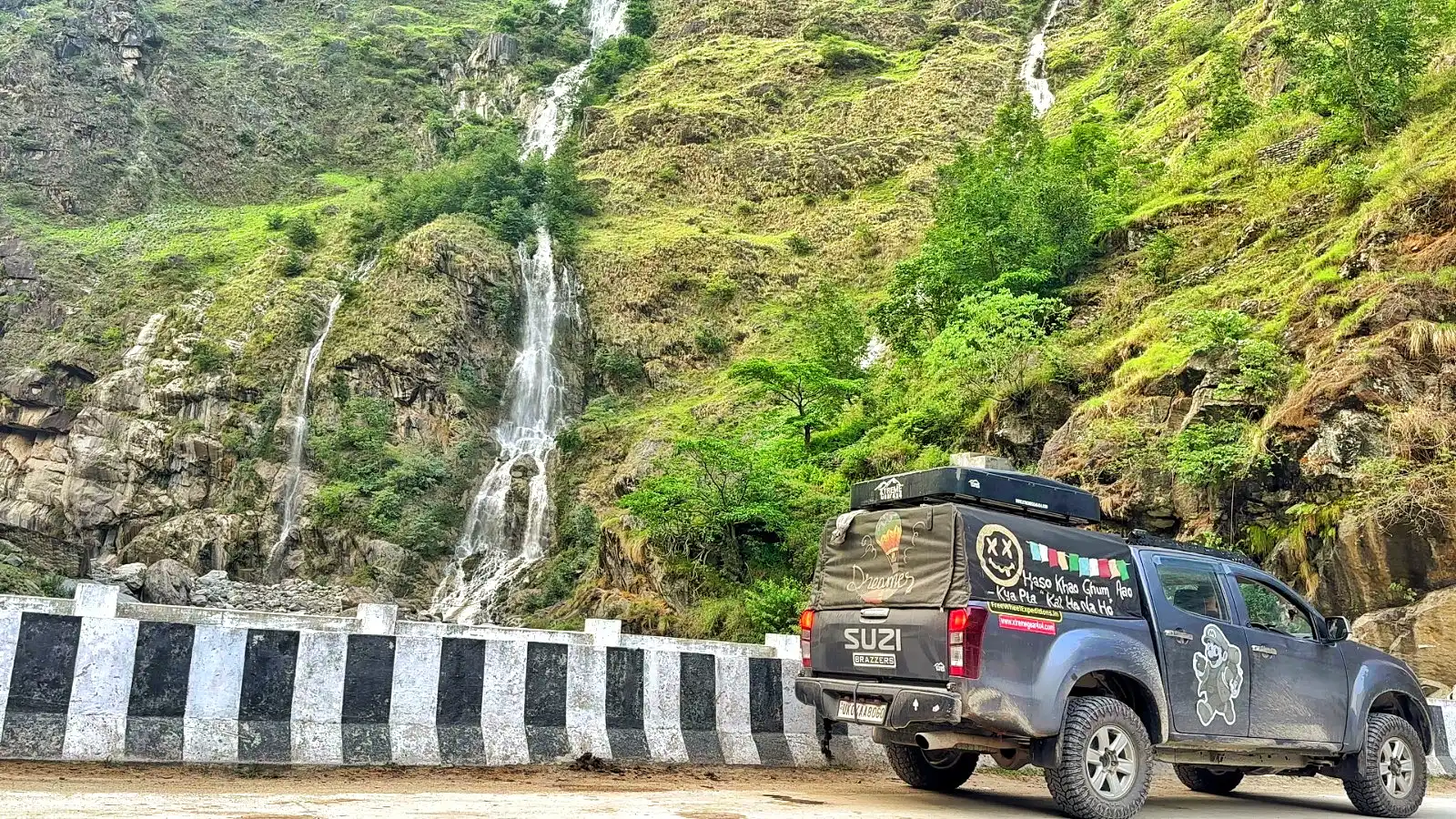
July and August? Don't. Just don't. The monsoon doesn't just bring rain here; it brings landslides that eat roads, rivers that swallow bridges, and a general atmosphere of "nature is reminding you who's boss." Winter is impossible the passes close, the snow wins, and you'll be stuck dreaming about it until spring.
What This Actually Costs
Look, I'm not going to pretend this is cheap, but it's not outrageous either. If you're splitting costs with 3-4 people in a vehicle:
Fuel: ₹8,000–15,000 depending on whether your SUV drinks like a fish (looking at you, older Thars) and how many times you get lost and have to backtrack because the road decided to become a river.
Stay: ₹5,000–12,000. Dharchula has basic hotels. Gunji has government guesthouses and homestays that are basically someone's extra room with a warm blanket. After Gunji, you're looking at ashram accommodation or camping. Bring a good sleeping bag. Trust me on this.
Food: ₹2,000–5,000. Eat local. The dal-rice at Narayan Ashram tastes better than anything I've paid ₹2,000 for in Delhi. Also, carry snacks. Lots of snacks. The kind that don't melt or explode at altitude.
Permits and local fees: ₹1,000–3,000. Sometimes there are "vehicle entry" charges that seem made up but aren't worth arguing over.
Total per person: roughly ₹15,000 to ₹30,000+. Could you do it cheaper? Maybe, if you sleep in your car and survive on Maggi. Could you spend more? Absolutely, if you want to hire guides or porters for the final stretch.
What It Actually Feels Like to Stand There
I need to tell you about the morning we reached Jolingkong.
We'd slept in Kutti the night before if you can call it sleep. It was more like passing out under six layers of wool while some goat outside my window had an existential crisis at 3 AM. By 4:30, we were up, shivering, stuffing ourselves with parathas that tasted like diesel because everything up there tastes like the kerosene stove it was cooked on. Nobody talked much. You don't, when you're getting close to something like this.
The drive from Kutti to Jolingkong is only about 15 kilometres. It took us two hours. Two hours of first gear, of the Thar's tires sliding on loose scree, of my friend in the back seat holding his camera like a prayer bead and muttering "please don't die please don't die" under his breath. The air gets thin in a way that doesn't politely announce itself it just quietly removes 30% of your lung capacity and hopes you don't notice.
Then suddenly, the valley opens.
And there is Adi Kailash
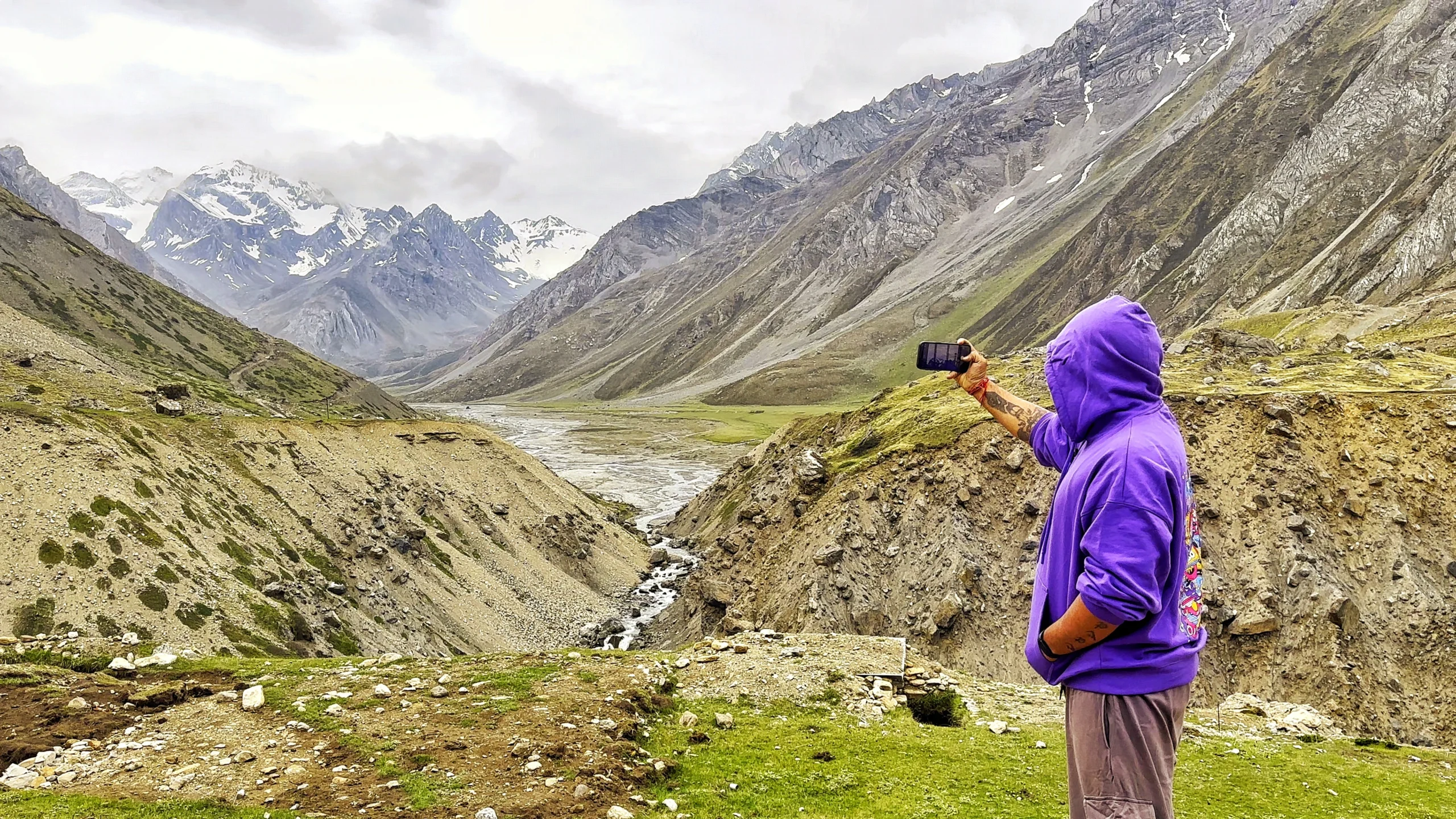
I'm not a religious man. I mean, I light diyas when my mother guilt-trips me, and I know the Hanuman Chalisa because it was beaten into me in fourth grade. But standing there, looking at Adi Kailash - Chhota Kailash I understood why people throw themselves at mountains.
It's not the tallest peak you'll ever see. That's the strange thing. It's not Everest, all arrogant and snow-crowned, demanding your awe. Adi Kailash is... still. It sits there like it's been sitting for ten thousand years and will sit for ten thousand more, completely indifferent to whether you made it or not. The snow on its face isn't dramatic; it's soft, almost gentle, like Shiva decided to pull a blanket over himself and take a very long nap.
My legs were shaking. Not from the cold, though it was freezing. From something else. From the feeling that I wasn't supposed to be here that this was a private room in God's house, and I'd somehow wandered in through the back door.
I didn't take a photo for the first ten minutes. I just stood there with my hands in my pockets, tears freezing on my cheeks, feeling very small and very stupid and very, very alive.
Om Parvat: The Second Heartbreak
We saw Om Parvat later that same day, from a different angle near the ridge.
You think you're prepared because you've seen photos. You've seen the viral shots the snow naturally formed into the "ॐ" symbol, so perfect it looks fake. You tell yourself, It's just a mountain. It's just snow and shadow. Don't be that tourist who cries at rocks.
But when you see it with your own eyes, from actual distance, in actual Himalayan light... it stops being geology. It becomes a message.
The "Om" isn't small. It's massive carved across hundreds of meters of the mountain face in snow and rock, so precise it looks calligraphed. And the wildest part? It changes. Depending on the sun, depending on the season, depending on how the snow has fallen, it looks slightly different every time. That day, in the late morning light, it was glowing. Actually glowing. The snow was so white it hurt to look at, and the dark rock behind it made the symbol stand out like it was burning.
I heard someone behind me a pilgrim from Gujarat who'd walked part of the way start chanting. Not loud. Just this soft, broken whisper of "Om Namah Shivaya" over and over, like he couldn't help it. And I got it then. I finally got why people drag their aging knees up to 4,500 meters. Why they risk landslides and altitude sickness and terrible roads. Because some things you can't explain with logic. You can only stand in front of them and let your body react however it wants to.
My body wanted to cry. Again. So I did. Quietly, into my jacket collar, while pretending to adjust my camera settings.
Lipulekh Pass: Where Three Worlds Breathe Together
Now, Lipulekh. This is where the trip transcends from "amazing road trip" to "I will never be the same."
Lipulekh Pass sits at roughly 5,200 meters that's 17,000 feet, if you think better in imperial. The air up there holds about half the oxygen you're used to, and your body knows it immediately. We'd arranged special permits for this beyond the standard Inner Line Permit, you need additional army clearance because you're literally standing at the Indo-Tibet border, and they don't let civilians wander up here to take selfies. Our guide knew a captain at the Gunji post who'd vouched for us after we spent an evening sharing Old Monk and stories about Delhi traffic. Without that connection? We wouldn't have made it. Full stop.
The drive up from Nabhidhang is where you find out what your vehicle is actually made of. It's a series of switchbacks cut into loose scree and glacial moraine, with drops on the outer side that don't end until they hit the Kali River valley below or Tibet, depending on which way you fall. We passed army trucks coming down, loaded with supplies, soldiers looking at us through dusty windshields with expressions that said, "You civilians are absolutely insane." We probably were. Every time the Thar's tires slipped on loose gravel, I could feel my stomach climb into my throat. First gear. Creeping speed. No guardrails. Just mountain, sky, and the very real possibility that one wrong move turns you into a statistic.
Then we crested the final ridge.
And I saw Kailash Mansarovar
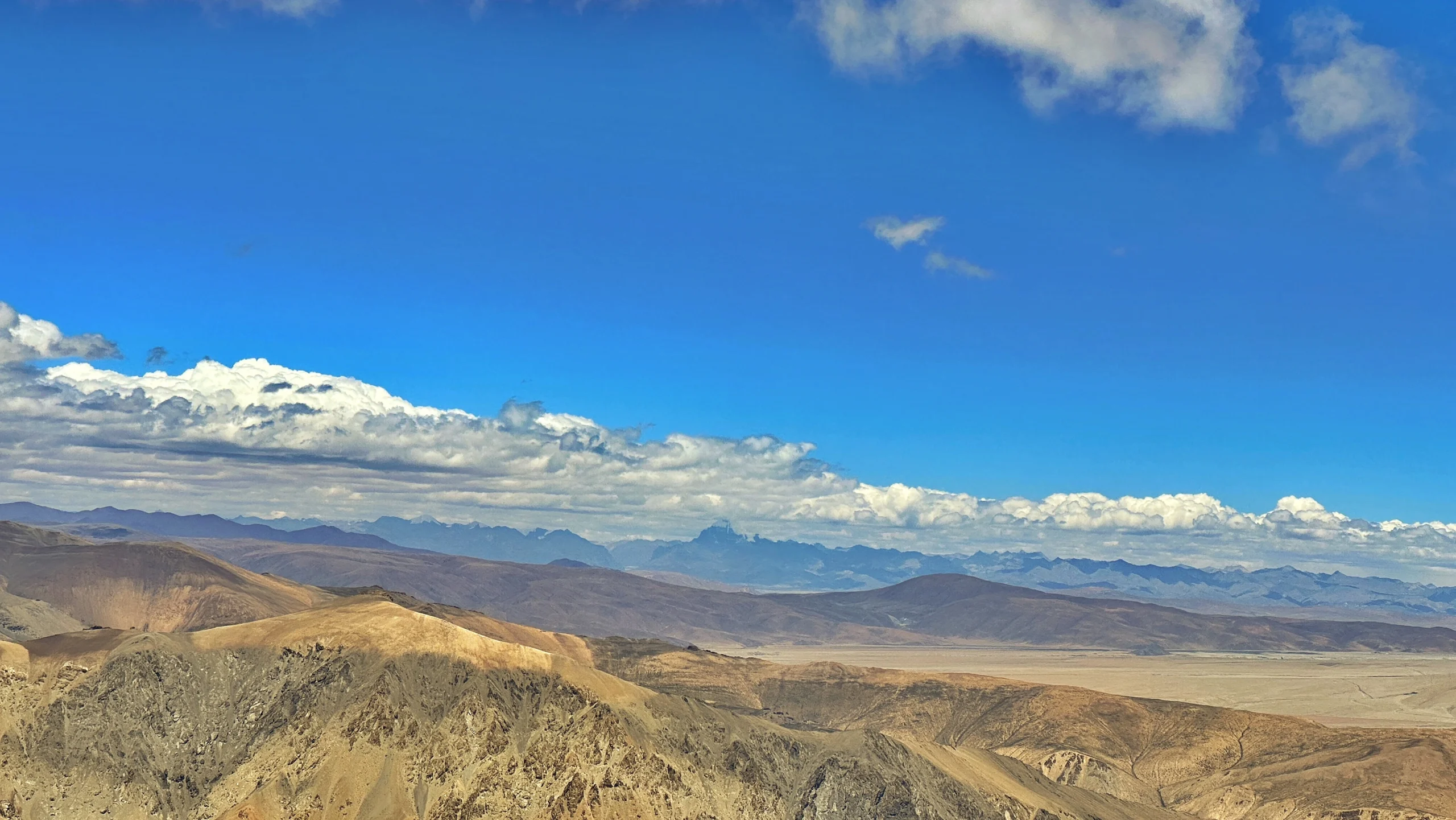
Not the whole mountain you're not in Tibet, you're at the edge, looking across the border into territory most people will never set foot in. But on a clear day, which we somehow, impossibly had, you can see the silhouette of Mount Kailash in the distance. That perfect, pyramid-shaped black peak that millions of people pray toward their entire lives, that Hindus and Buddhists and Jains believe is the actual centre of the universe. It was faint, almost a ghost on the horizon, hazy with distance and altitude, but it was there. Real. Not a postcard. Not a story my grandmother told me before bed.
Standing at Lipulekh, I could turn my head slowly slowly, because sudden movements at 5,200 meters make you dizzy and see three sacred abodes in one sweep.
To my left: Adi Kailash, close enough to touch, intimate and powerful, its snow catching the morning light like a lantern.
To my right: Om Parvat, with its impossible divine signature carved in snow, still glowing from the angle we'd seen earlier.
And straight ahead, across the border, across the line that humans drew but the mountains ignore: Mount Kailash, the real one, the one that started all of this mythology in the first place.
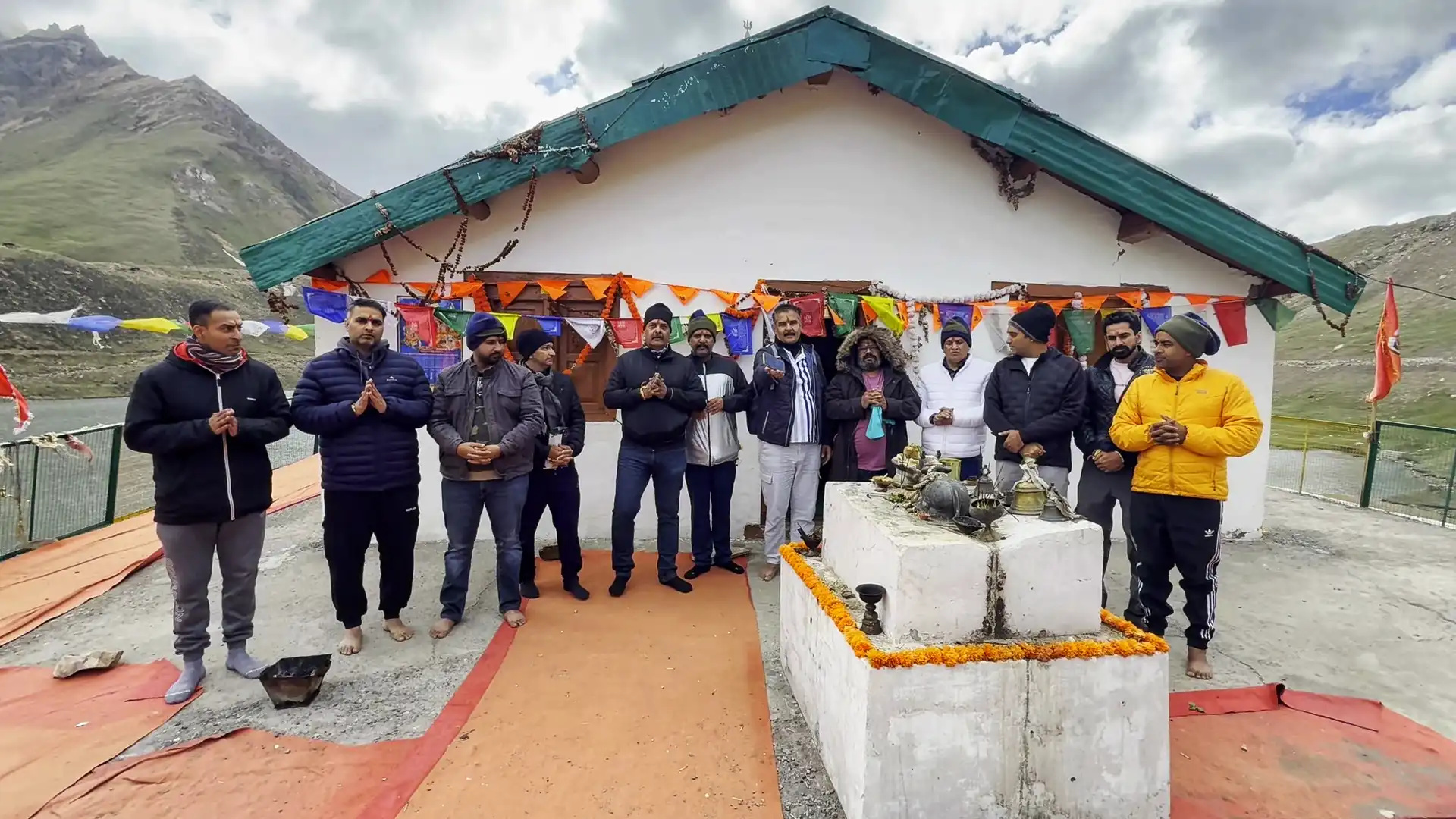
It felt like standing at a spiritual crossroads. Like Shiva had left three different calling cards, and I'd somehow collected all of them in one morning.
The wind at Lipulekh doesn't blow, it screams. It comes straight from the Tibetan plateau, cold and ancient, carrying nothing but altitude and silence. It hits your face like a physical thing, like the mountain itself is pushing you back, testing whether you really want to be here. My ears were ringing from the pressure change. My lips were cracked and bleeding a little, I only noticed when I tasted iron. I couldn't feel my toes inside my boots. And I have never, in my entire life, felt more grateful to be uncomfortable.
Because discomfort is how you know you're present. When everything is easy when the hotel is warm and the WiFi works and the road is smooth your brain checks out. But up there, with oxygen deprivation making every thought feel like a treasure you have to dig for, you are forced to be present. You have no choice.
There's an army outpost at the pass a small bunker, some communication equipment, a few jawans in heavy jackets who looked at us with the kind of patience people reserve for very lost tourists. They offered us hot water from a thermos that tasted like metal and salvation. One of them, a kid from Bihar who couldn't have been older than 22, pointed toward Tibet and said, "Wahan Kailash hai. Aapko dikh raha hai?" There's Kailash. Can you see it? I wanted to hug him. I didn't, because I was crying again and didn't want to explain.
I remember thinking: This is what pilgrimage means. Not the Instagram photo. Not the checkmark on a bucket list. This feeling right here of being stripped down to nothing but heartbeat and breath and the overwhelming, terrifying, gorgeous reality that the world is so much bigger than your plans.
We stayed at the pass for maybe 45 minutes. You can't stay longer the altitude doesn't let you, and the army has schedules and protocols and a very real job to do protecting this border. But those 45 minutes expanded in my memory to something like a year. I can still close my eyes and feel that wind. Still see the prayer flags snapping like gunshots against the sky. Still remember the exact shade of blue that exists only above 5,000 meters a blue so deep it feels like you're looking through the sky rather than at it.
When we drove back down, nobody spoke for an hour. Not because we were tired. Because there was nothing to say. We'd all been hit by the same thing, and language felt insufficient.
The Moments That Stay With You
Om Parvat is obvious the big showstopper. But honestly? It's the small stuff.
It's Narayan Ashram, where an 86-year-old baba made us tea and talked about the 1962 war like it happened last Tuesday. It's Gunji, this tiny cluster of buildings where the army and locals coexist in a rhythm that makes you feel like you've stepped back 50 years. It's crossing the Kali River and realizing that water has been flowing from glaciers to ocean since before your grandfather was born, and it'll keep flowing after you're gone.

It's the villages where kids run out to wave not because they want money but because a new vehicle is genuinely the most exciting thing happening today. It's the silence at Jolingkong real silence, not "city silence with background traffic" where you can hear your own heartbeat and it sounds too loud.
The Hard Truth About Difficulty
Is it technically hard? Not really. You don't need to be a mountaineer. You don't need oxygen.
But it's remotely hard. It's "my phone hasn't had signal for two days and my mother is probably filing a missing person report" hard. It's "we haven't seen another vehicle in four hours and I'm not entirely sure this is still the road" hard. It's "the altitude hit my friend at 3,500 meters and now he's crying about his ex-girlfriend and I have to drive while also being supportive" hard.
The weather changes mid-conversation. One minute you're in a t-shirt, the next you're scrambling for jackets because a cloud just parked itself on your face. Accommodation after Dharchula ranges from "basic but warm" to "I hope you like sharing your room with spiders."
What You Actually Need
- A 4x4 SUV with real ground clearance. Not a crossover pretending to be an SUV. The kind of vehicle that laughs at potholes because it has actual suspension travel.
- A spare tire. Two, if you're paranoid (and you should be).
- A paper map, because GPS lies here. It'll tell you there's a road where there's clearly a cliff. It'll insist you've arrived when you're looking at a landslide.
- Patience. More than you think you have.
- A playlist that doesn't require internet. Download everything. The silence is beautiful, but six hours of it gets weird.
- Basic medicines. Altitude sickness doesn't care how fit you are.
Final Thoughts
The Adi Kailash road trip isn't going to give you the polished, curated experience of Manali or Rishikesh. Nobody's selling you "wellness" or "transformation" here. What you get instead is something rarer: the feeling that you went somewhere that hasn't been smoothed out for tourists yet.
You'll come back with dust in places you didn't know dust could reach. You'll have stories that start with "so there was no road" and end with "and then the army guys shared their rum." You'll understand why people pilgrimage not because it makes them better people, but because some places demand that you meet them on their own terms.
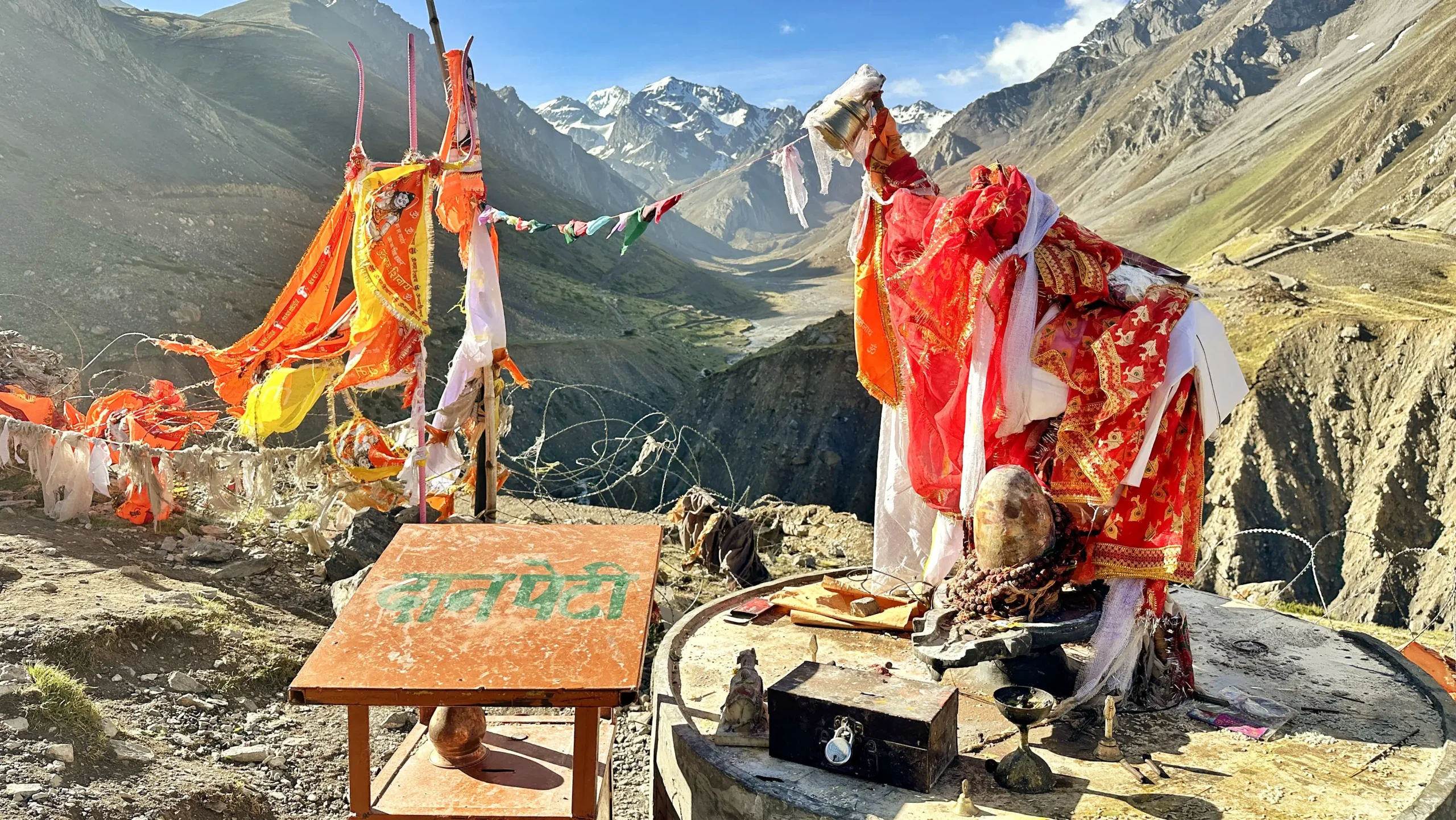
And when you finally stand there, looking at Adi Kailash or Om Parvat, with wind that tastes like snow and prayer flags snapping above you, you'll get it. You'll understand why Shiva chose these mountains. Why anyone chooses these mountains.
Just go. Before the road gets paved, before the permits get stricter, before someone builds a Starbucks in Dharchula.
Go while it's still wild.
Have you done the Adi Kailash route? Drop your stories in the comments, I read every single one, and I'm always looking for road trip buddies who don't complain about bad roads.
Planning your first trip? Ask me anything. Seriously. I will talk about this route until you regret asking.
No comments yet. Be the first to share your thoughts.
Leave a Comment