Most people approach Spiti Valley from Manali — over Rohtang Pass and Kunzum La, through the dramatic high-altitude desert entry that has become the default route for adventure seekers. But there is another way in. A longer, quieter, more spectacular route that follows the Sutlej River through deep Himalayan gorges, passes through the last village on the Indo-China border, and delivers you into Spiti through the back door. This is the Kinnaur route — and it is, mile for mile, one of the most beautiful drives in India.
Why drive Chitkul to Spiti via Kinnaur?
The Kinnaur Valley route from Shimla to Kaza via Chitkul is open for a longer season than the Manali route — typically from April through November, while the Manali-Kunzum highway only opens in mid-June. This makes it the only viable entry point for early-season Spiti drives.
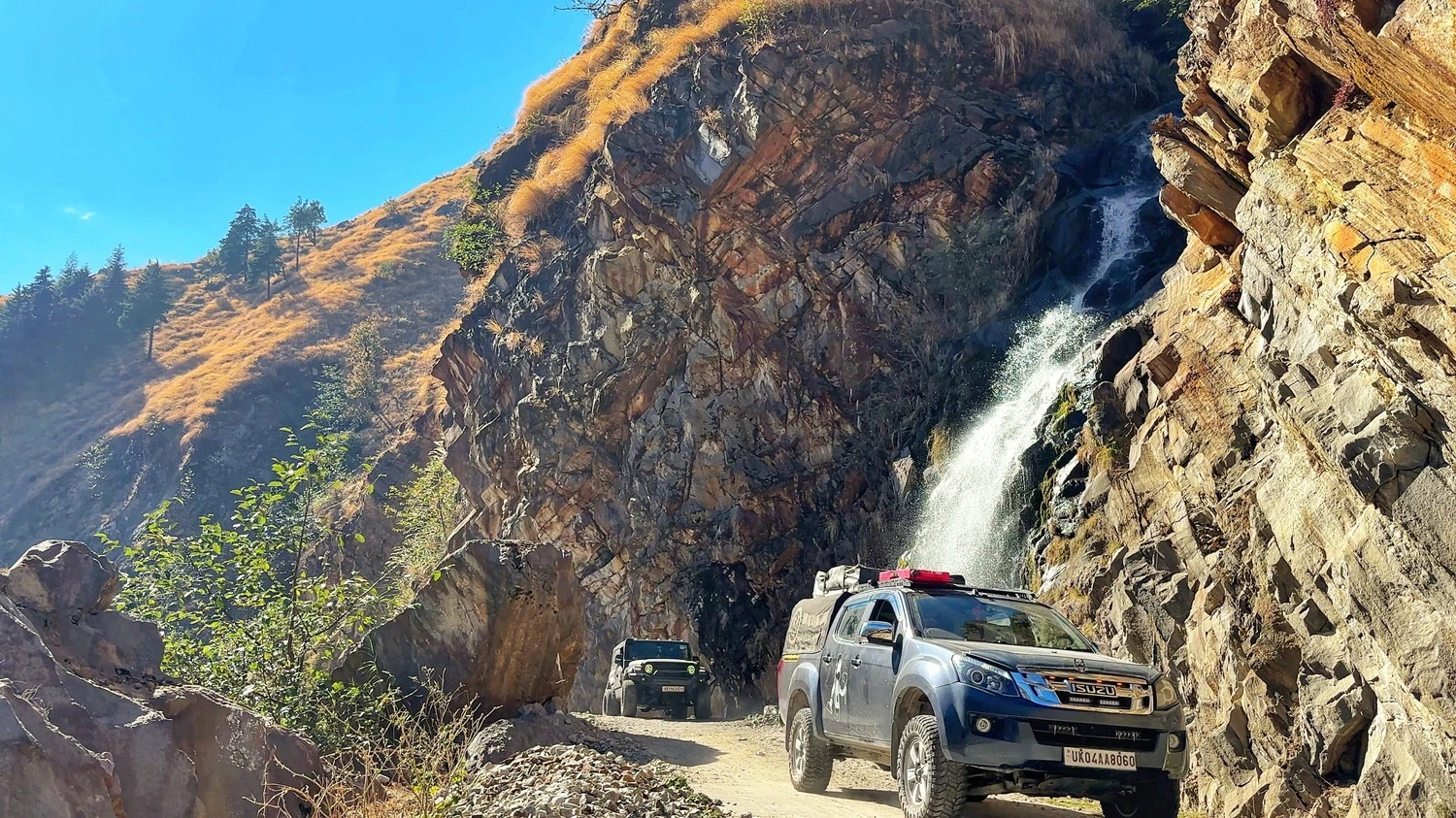
Beyond practicality, the Kinnaur route is simply extraordinary. The road clings to cliff faces above the Sutlej River gorge, passes under overhanging rocks held up by nets, crosses into apple orchard country at Kalpa, and climbs through progressively more dramatic terrain until the landscape suddenly shifts — green gorges giving way to the barren brown moonscape of Spiti. The transition is one of the most dramatic geographical shifts you will ever witness from a driver seat.
Where is Chitkul and why does it matter?
Chitkul is a small village in the Baspa Valley, approximately 28 kilometres from Sangla in Kinnaur district. At 3,450 metres, it sits at the end of the last motorable road before the Indo-China border — officially the last inhabited village in India on the old Hindustan-Tibet trade route.
Most people visit Chitkul as a day trip from Sangla or as an overnight stop. For self-drive expeditions taking the Kinnaur-Spiti circuit, Chitkul is a natural first major halt after leaving Shimla — a chance to acclimatise gently before the higher altitudes ahead.
The village is beautiful in a way that feels untouched. Wooden houses with slate roofs, a small temple, the Baspa River running cold and clear below, and views of snow-capped peaks that include Kinner Kailash — the sacred peak considered the winter home of Lord Shiva in local tradition.
The route: Chitkul to Kaza via Kinnaur
From Chitkul, the route back-tracks to Sangla and then continues up the Kinnaur Valley on NH5 — the old Hindustan-Tibet Road. Sangla to Reckong Peo is 55 km — the district headquarters of Kinnaur where you obtain your Inner Line Permit if not already done. The views of Kinner Kailash from Kalpa, 8 kilometres above Reckong Peo, are extraordinary. Reckong Peo to Nako is 90 km — the road enters the Spiti River valley here. Nako village sits at 3,600 metres above a small sacred lake. The Nako Monastery dating back to the 10th century is worth the short walk up. Nako to Gue is 40 km — Gue is famous for its mummified monk, a Buddhist lama preserved naturally for over 500 years, still in a meditation pose. Gue to Tabo is 15 km — Tabo Monastery is one of the oldest continuously operating Buddhist monasteries in the world, founded in 996 CE. Tabo to Dhankar is 35 km — Dhankar Monastery sits on a mud cliff 300 metres above the confluence of the Spiti and Pin rivers. The short trek to Dhankar Lake takes about an hour and is worth every step. Dhankar to Kaza is 35 km — the final stretch into Kaza passes through the heart of Spiti valley. The landscape is fully transformed — you are in the cold desert now.
Road conditions on the Kinnaur route
The Kinnaur highway has sections that demand respect. Between Reckong Peo and Pooh, the road passes through narrow cliff-face sections where overhanging rocks are held back by wire nets. The road is generally better maintained than the Manali-Kaza highway and is passable in most vehicles. A 4x4 is recommended but capable hatchbacks complete this route regularly during summer months. Check BRO updates before departure for landslide closures.
Best time for the Chitkul to Spiti drive
April to November is the window, with May-June and September-October being the sweet spots. July and August bring monsoon rains to the Kinnaur side — not as heavy as elsewhere in Himachal but enough to increase landslide risk on the cliff sections. September is ideal — post-monsoon clarity, apple harvest season in Kinnaur, and Spiti at its most photogenic.
How FreeWheel runs the Kinnaur-Spiti circuit
FreeWheel Expeditions covers the full Kinnaur-Spiti circuit as part of our Magical Spiti Valley Self Drive Expedition. The convoy enters via Shimla and Kinnaur — overnighting at Narkanda, Raksham, and Nako — before crossing into Spiti through Tabo and Dhankar. The exit is via Manali over Kunzum Pass, giving members both entry routes and the complete Spiti experience. If you want to drive this route with a convoy that knows every stretch of it,
our Spiti expedition covers it in full.
No comments yet. Be the first to share your thoughts.
Leave a Comment